Showing posts with label Plants. Show all posts

Thursday, August 22, 2013

Something I hadn't considered

I've been having some back and hip pain lately. Stiffness, mostly. I have wanted to incorporate some stretching into my exercise routine, but just have not managed to do so. I did morning yoga with the PBS lady for about a year, but it's been five years. No wonder I'm stiff.

In the minor upheaval that has been August, where my kitchen is being remodeled, I have closed my Etsy shop to work on new things, suspended my banjo lessons and am very busy at work, I also did not sign up for another three months of the spinning class I've been faithfully going to twice a week for almost the last three years because I need to structure that stretching time.

I went over to one of the local health clubs in town and signed up for a month to month membership because they offer spinning, yoga, and a couple of other group fitness things. There are several classes to choose from most days, and I live about the same distance from the north and the central locations, so I get even more choices. I haven't told my spin ladies that I'm leaving yet, but this is the right decision for me at this time.

I had an evaluation by one of their trainers. They did a strength test (meh), flexibility (it was so low, she had to do it twice), and cardio. The cardio had me step up and down on a stool for three minutes to the timing of a metronome, then she took my heart rate. I came out on the high end of "very good", which made me happy. I may be overweight and not flexible, but my heart is good.

Well, I went to my first yoga class last night. It was called "Deep Stretch Yoga". Holy cow. I knew I was tight around my hips and back, but man-o-man, I had no idea how much. I was late because I got stopped by a train, something that is sadly common in that part of town during rush hour, and sort of ducked in, grabbed a mat and followed along. I loved this class. They freely use props like foam support blocks, folded blankets, and pillow bolsters for support in the poses. You just shim in what you need and try to hold the pose for the 3 minutes or so. It was AWESOME! She worked on some relaxation stuff and breathing. It was all I had hoped. I will stop gushing now.

Here's a kitchen picture from two days ago. Yesterday they started on cabinets, but it's not light enough in there yet today to take a picture (no lights).


The plaster on the walls and ceiling is done and it is smooth and lovely. The rest of the house has old lathe and plaster, some covered with wall paper, so the smooth texture fits with the rest of it. They got the old gas line out as well. 

I need to take some garden pictures. I've been very pleased with the big zinnias and Black Eyed Susans I've planted from seed, and will do even more cut flower varieties next year. I really like having a little bouquet on the table. This was taken on the window they will be replacing soon, hence all the debris.


Saturday, March 2, 2013

Thanks, Target


I'm not one of those people who is at Target the day after a holiday to scavenge the newly-discounted post-holiday goodies. I do swing by the sale shelves occasionally, though, and picked up an Amaryllis bulb in its own pot sometime after Christmas for around $5. 

The interesting stuff:cost ratio on this purchase has been really high. It doesn't exactly grow in front of your eyes, but almost. It's provided us with a couple of months of observation, and is now on its way out. I have researched how to make it all happen again, and am going to try to get this thing to rebloom next year. It involves lots of sun, then getting it outside, so I'm going to have to repot it into something that has a water reservoir because I'm not that good at remembering to water pots daily. 

I have another Amaryllis that is at least 3 years old (post bloom, probably got that on sale, too) that consists of two leaves that limps along in a darkish corner of my living room and yearns to bloom again, so I'll bring it along for the experiment. 

Mr W was suitable impressed with the growth of the bulb, and asked questions about what was going to happen, which I could reply with, "This, but wait and see, too". Totally worth the $5. 

Wednesday, January 23, 2013

OK, now that that's done...

Sorry for the blogging silence. I've been working on a presentation for work for the last few weeks that has occupied a big space in my mind. The presentation was yesterday, it went very well, and I'm hoping that my boss will tell me in the next day or two whether I'll have my contract renewed and whether my status will be changed from contractor to a "fellow", which would be a little more secure.

My boss and I met with his boss and his boss's boss, who is the Director of the division. There were also two high-up administrative folks there. It was a friendly crowd, but my task was to detail the projects we've done, what we're working on and then talk about future projects to sort of show that I'm valuable to the organization.

My boss and I started talking about these projects a few months ago, and they have to do with genetically characterizing insecticide resistance in the mosquitoes we work with. Yeah, I don't really know that much about it either. But I downloaded about 40 papers and read most of them, and got enough of a basic grasp of the research (it's actually pretty darn interesting) to come up with three ideas for projects we could do.

They all seemed to think these were good ideas, and I was really happy to hear my boss's boss expand on the things I said, making the connection between what we do and the mission of the division.

Things are going well at the moment. It's good to have this thing done and turn my attentions elsewhere. Once I hear for sure that I'll be renewed, I'm going to embark on some home renovations (updated kitchen! new windows! the deck I've been whining about for 4 years!) that I'm sure will provide plenty of blogging fodder. I'm still making bracelets, but still bouncing back from a holiday push I'm not sure was necessary. It's time to start thinking about the garden, and I need to redo my irrigation system this year and shore up those old bookcases I've got for raised beds. I think I can get one more year out of them.

I'm going to try to blog more, and set a 15 minute limit to post. There may be pictures or there may not. Here's one from one of the greenhouses at the Denver Botanic Gardens when Mr W and I went there in December to see the lights.


Wednesday, October 31, 2012

Some of my history via houseplants


I've been meaning to do a post on houseplants for a while now. A lot of people keep them in their homes, and I would wager that most people's houseplants were propagated as cuttings from other people's houseplants. I've thought about how cool it would be if we could look at them genetically, and see how swaths of people in certain areas all own what is essentially the same plant. 

Not to mention the connection that a person can feel because they have a plant that was given to them by a person who is no longer around, or is around and the plant just reminds us of them. 

For example, the original plant that the cutting in the middle came from, a Swedish Ivy, was given to my mom by a neighbor who passed away young. It must have been the early 1970's as we had just moved into the house where I grew up. I've got three versions of this plant in my house at the moment, and just started this one. I don't want to be the one who breaks the chain and lets the plant die, you know?

The plant on the left was part of an arrangement someone sent to the funeral home after my mom died. My SIL, who ironically is not a plant person, had the foresight to grab a cutting before the rest of the arrangement was tossed, and they propagated it in their home for a few years. I then took a cutting a few years ago. I've got a couple of these, too. I don't know what the name of it is, but it's a vine, and there is a tremendous plasticity in the leaf shape, depending on how much light it gets. Lots of light makes large (8" x 6") leaves. Not so much light makes smaller, rounder leaves. It's pretty cool. 

You'd recognize the plant on the right if you saw good examples of the leaves. They unfurl with cutouts on them, and they can be large (8-10" across). This one's also a vine. I just looked it up and it's a Split-leaf Philodendron. The Biology Department where I went to school has a large specimen of this plant, and when we started holding classes in a new building next door, the office ladies moved it to the end of a hallway. It was quite an effort, as various parts of it had to be supported either with sticks or from wires hung from the ceiling. Somewhere in the process, a leaf and a bit of stem broke off. Someone put it in a large lab flask, put some water in it, and there it sat in the lab where I taught as a grad student, for most of my last year of school. When I was nearly done with school, there this sat, one tired leaf in a swirling mass of roots. It was an orphan I need to rescue, and it likes its new home. Almost too much, the thing wants to be a really big plant. 

Every summer, I move to the front porch the half-dozen or so houseplants that are in my bedroom. Sometime in October, I move everyone back to my room, which happened this past weekend. I recently moved to a new office space that is direly in need of some green stuff, so in the usual cutting back to tidy up the plants, I made a few starts to eventually take to my office cube. I love how the process continues, that I can utilize these plants to make my new space prettier. And that they mean something to me.

I've also really liked having the starts on my window sill. I don't know, plants have always done that for me. I look for signs of root growth as I do the dishes. It's supposed to be warm for the rest of the week, so I might take one or two of these to work today while the weather's nice. I can then just bring a pot with a bag of soil once the roots are ready. 

Do you have any plants with a past? 


Sunday, August 26, 2012

More flower pictures


I bought a packet of burgundy sunflower seeds and one of them, after a slow start, has grown into a behemoth of a plant. Beautiful flowers, but the thing is probably 8' x 8'. The bees love it, and the flowers are a very pleasant dark red color.


Here's a view from the side of the plant. You can see the one flower that's facing the camera in the upper right 1/4 of the picture. It has more blooms now, and seems like it might tip over, but I think it'll be OK. Maybe next year I'll stake them out so they stay a little straighter. 

If you're interested in winning the bracelet of your choice from my Etsy site, here's a link to the blog post at my other blog that has the details. You can enter up until 9 pm Mountain Time Wednesday.


Monday, July 2, 2012

Tuesday, May 22, 2012

Jewels

How about this corn? Beautiful. Here's the link to the story I saw about it.


From the story:

"No, this isn’t Photoshop or a gemstone-studded trinket—just an ear of corn. Seedsman Greg Schoen of theSeeds Trust got this “Glass Gems” corn from his “corn-teacher,” a part-Cherokee man in his 80s."

and

"But kernel color is a fascinating—dare we say, colorful—topic in the annals of genetics research. For one, why are there so many vibrant colors in a single ear of corn? You don’t usually see flowers of different colors on a single tree."

That's right. Come for the corn, stay for the genetics.


Wednesday, March 21, 2012

Screen free Tuesday update


Well, first things first, these are my seed starts this year. I love the cooperation shown by all the stuff I planted. Some stuff hasn't come up yet, but a lot has, and some of that was from seed packs labeled "Packed for 2006". I mean they're seeds, what's a few years in the big scheme of things?

I especially liked how the zinnias came up in seemingly a matter of hours (it was probably 3 days) and are growing so fast one can almost watch it.  I still need to find a cover for the tray; I end up watering a lot and I'm sure the conditions could be a little more consistent if I did have a clear cover. I am thankful my kid likes broccoli. We were eating dinner (which included broccoli) and I showed him the sprouts. He said he knew that we ate the unopened flowers, but what would happen if you let the plant go? My scientist heart quickened.

I knew I had him for about 15 seconds, so I quickly explained what bolting was and told him we'd let one of these broccolis bolt in the garden this spring. "Cool". Yes it is.

Due to parenting schedule changes, I hadn't had Mr W for a couple of Tuesdays, so my screen-free Tuesday nights campaign had to start from scratch and included moping, tears, and outrage. They've got three (!) weeks of standardized testing that started yesterday, so he thought he deserved a reward. I held firm, and on the way home from the dog park he asked if we could go out after dinner and get ice cream. At that point I knew he had surrendered to his fate, and he was good company for the rest of the evening.

He wanted to see SFTs as a punishment, and I told him he could do that, although I considered them an opportunity for us to do something together. And for him to think of other things to do instead of defaulting to the screened things. I hope he eventually gets that. I think he will.

We did get ice cream, and went into the Culver's instead of using the drive through. I ran into a former student working the counter, and she acknowledged how she didn't do so good in the class, but was going back to school in the fall after taking a semester off. I told her I thought that was great, and later thought how very many things community college students often have going on in addition to school. I think all of the students I had in my classes worked, many of them had full time jobs. A lot had kids or other family obligations. So, bully for her. She's a smart cookie and can go into whatever she wants.

Monday, September 19, 2011

Recap

It was a good weekend! Mr W and I ended up going down to the Denver natural history museum to see their new exhibit on T. rex, and enjoyed that. They had a few animatronic dinos that had motion detectors, so their heads would move in response (more or less) to movement in front of them.

And we cleaned the house a bit, and harvested some stuff from the garden. The dog keeps eating the raspberries, so I have to monitor her while she's out there. The yard is too small to keep her out of that area, so I might just have to accept the loss.

We had lunch with Mr W's grandma (my former MIL) and that was nice. The place where she lives, basically a nursing home, is such a stark reality check, that it's good to go there and get zapped every once in while. It is a good reminder to stay active, take good care of oneself and enjoy life in the moment.

This week is shaping up to be busy and social and I like that. Mr W's been liking his cross-country practices, even went out for a short run around the block with the dog yesterday (cha-ching!). I've signed up through a Meet up group to go on a "haunted Fort Collins" / Fort Collins history walk downtown this week. I'm intrigued. My neighbor invited me over to their tapas party on Saturday, and I've got a single parent group pot luck on Friday. Whew!

I finally rejoined the Native Plant Society, which is something I've been meaning to do. They are pretty active in learning about plants and in conservation. The president emailed me, saying the annual meeting was coming up and she wanted to talk to me about the plant I studied because it was going to be discussed at the meeting. Cool! It's like being a plant celebrity ;-)

Monday, June 13, 2011

Hike: Youngs Gulch 6-12-11


Sally and I went for a hike yesterday, to one of our favorite spots, Youngs Gulch. There are probably 12-15 small river crossings on the way up to the top, and my Sal revels in each one. We started at 10:30, but it was still a little too hot for me. We'll start earlier next time. Above is Sal with a bunch of blue Delphinium.


Lots of Rocky Mountain Columbine on the trail. Showy and beautiful.


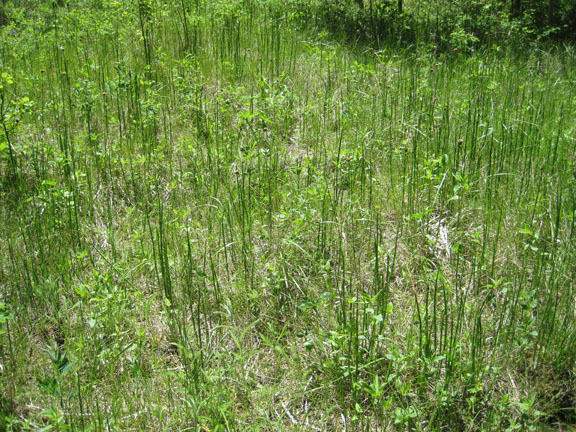
Scouring Rush (Equisetum). I think it's so cool how specialist plants are really abundant where they find the right conditions.


Shooting Star (Dodecatheon sp.). Small and unusual.


These are some lovely Calypso orchids. Each one is about five inches tall, so a common name is Fairy Slipper.


Me and Sal.

In other news, I got word yesterday that I'll have a phone interview this week for a researcher position in Denver. I forgot to save the job announcement, so I had to ask the HR person to send it to me again. I feel like a dufus, but it's a good lesson. Also, another in-town Biologist job got posted. This is the position that called for resumes ahead of the official posting, and I got to send mine directly to the person who would be my supervisor. I think it would be a great fit, and will enthusiastically throw my hat into the ring.

Sunday, May 1, 2011

Like visiting an old friend


Sally and I went for a nice hike this afternoon. The weather's been kind of cool, and as a result my desire for yard work has been ho-hum. I did get one thing done, which I'm going to put in another short post, plus odds and ends like fixing the hinge on the gate in the yard that's been falling apart for the last (*cough*) couple of years.

This lovely little plant is P. bellii. I studied it in school, so I feel like it's an old friend in a way. It's pretty specific in terms of its habitat, loving shaley soil that seems inhospitable to many plants, so it's kind of rare. There's a population of it where we hiked, and it's just coming into flower. I should have put something in for scale, but the whole thing is about 5" across.

I've noticed a difference hiking this year, since I started doing Spin classes last fall. I have more energy when I hike; it's easier. That's a good feeling. The dog loves to hike, and it's good to get her out as well.

Saturday, October 24, 2009

Fall Color - Colorado Style


We don't get much in the way of fall color here. There's yellows, but really it's no comparison to what was routinely seen in Ohio. This pic is of one of the trees on my tree lawn, a Serviceberry. The robins love the berries in early summer, and it puts on a good show in the fall. We got a few inches of snow a few weeks ago, and I thought that would put the kibosh on nice color. This ain't bad.

Wednesday, August 12, 2009

A tad conflicted

Let me start out by saying that I love my job. I like it that my boss leaves me be to get my work done, and as long as the hours are in, he doesn't care when I work them. I also get a lot of say in what projects I work on, and we have funding to the extent that I don't have to scrounge to buy reagents.

Doing mosquito fieldwork is not my favorite, but I haven't had to do all that much. Having to attract mosquitoes with horse manure laced water has its downsides. On the upside, I'm going to Denver today (about an hour's drive south) to collect more egg rafts out of trash cans that have water in them. It's easy, and if it works it gets us another colony population to work with.

While I'm down there today, I'm also meeting with the associate director of research at the botanic gardens in Denver. I'll do it more or less on my lunch hour, so I'm not worried about using work time to do this, but I feel a little weird, seeing as I like my current job, that I'm inquiring about another. One that I would likely have to move to Denver for.

But Mr W and I were down there the other day, and even though he wasn't all that interested, and it was hot, I was blown away by the gardens. I loved the feel of the place so much that I sent my CV to this person. I had also heard through the grapevine that they were going to start a conservation genetics program so it was a good time to see what their plans are. I was a Botany major, and I do want to work with plants again someday.

So, we'll see how it goes.

I finally started preparing lectures for this intro biology course I'm teaching and haven't slept well ever since. I should have started earlier, and I will have enough time, and it's not that I don't know the material (water is the universal solvent, by the way). But I'm not in the groove of giving my free time to this class yet. It will happen, but I don't think I'm going to rest easy until I'm about three weeks ahead on lectures and have the other stuff like assignments, and quizzes, in order.

Monday, March 23, 2009

Signs of Spring


Yesterday, I started the process of tidying up my garden for spring. Here's some pictures! This might be the year we do something with the rhubarb. Mr W knows the Rhubarb Song from A Prairie Home Companion, which I didn't realize until this weekend. Part of him must be listening. He likes the sound effects too.

It amazes me how the rhubarb dies to nothing in the winter, then rises up in the spring, like crumpled fists pushing out of the dirt. It's freakishly hardy. I never water it, it's right next to the driveway, and it puts out huge (5' tall) flower spikes along with the huge leaves.


Wednesday, January 7, 2009

Insert Happy Dance here


To counter any post-Christmas let-down, the gardening catalogs are on their way!! I love this part of the process, going over the beautiful pictures, bookmarking certain things it would be nice to have, and generally enjoying a display of color that ain't going on outside. The picture is from one of my favorites, White Flower Farm.

Friday, September 26, 2008

Remind me, next year about this time

I'm very happy with how my garden turned out this year. It was the first year I had everything planted for my side garden, which runs along an alley. I also have a side yard on the other side of the house, but hardly ever go there except to cut the grass. It gets too hot out there in the summer, and there's no shade.

I plan to remedy that sometime this winter by having my neighbor, who has a remodeling company, take out the windows of my front porch area, which was enclosed years ago. It's a house and neighborhood that are very amenable to front porches, and it will give me a place to be outside (and still have my internet connection :-)
Like I said, I like how my garden turned out this year, and will post some pictures soon. I'm especially happy with my well-behaved pumpkins, which stayed more or less confined to the area I gave them, as opposed to making a run across the alley.

But I always, at least since I've owned houses and gardened, feel a tad bit of remorse at this time of year that I did not plant flowers that have their peak flowering at the beginning of fall. I vow to remember to do it the next year, and am swept away at the nursery by the things that are flowering right then.

Sure enough, we were walking around the neighborhood and I saw the two things I wish were in my garden right now:

Japanese Anemone (Anemone sp.), part of the Buttercup family.

And the other are New England Asters (Symphyotrichum novae-angliae) of the Aster family. They are beautiful and a really vibrant shade of purple.

I'm going to go to a couple of nurseries around town this weekend and see if they have either of these. I might get lucky. If not, remind me next spring!!
Update:
I was able to find an Anemone at the garden center! I'm excited. They are supposed to like afternoon shade, so I tucked it in a corner and we'll see. It's very pretty!

Tuesday, August 19, 2008

Finally, a use for rutabagas


Yes, I'm afraid I don't care for rutabagas.  My sister used to put them in her stew and in my humble opinion, altered the taste of the whole thing (ewww!)

Well, at Michigan State, researchers are turning to rutabagas as a potential source of biofuel.  They are genetically modifying the rutabaga genome by inserting a modified version of a gene (the article doesn't say from what organism) that increases the plant's ability to turn carbohydrates into lipids.

The thinking is that if the plants can be modified to store lipids in their roots (which I think are actually tubers - modified stem tissue as opposed to actual roots) they can be grown for biofuel in places like Michigan, that can use all the new agribusiness it can get.

Ha! Here's a site devoted to rutabaga enthusiasts.  I didn't know that they're in the Brassicaceae, or Mustard family.  Last month was National Rutabaga Month, by the way.

Wednesday, August 6, 2008

How does my garden grow


The mulch project drags on. If you've not been privy to this saga, I have a tree lawn that is hard to water and cut, so I wanted to cover it with something to make it look nicer. I stopped watering it some time last summer , and it has looked like hell for weeks (but the weeds were doing well).

Tom (or Saint Tom, as I will refer to the gardening services guy because he worked a miracle with his rototiller) turned up the soil on the tree lawn first thing Monday morning. Then on Tuesday the nice people from the landscape supply company unloaded the three cubic yards of mulch in the street in front of my house.

Come Tuesday afternoon, I'm ready to start raking dirt into its final formation, and moving mulch. Then the rain came. I know it's just a coincidence, but for the two days we've had torrential downpours in the afternoon. Wow, lots of rain.

So my mulch pile waits. I'm happy it didn't wash away with the rain, but now it will be a few days before I can work on this. It's just so funny how this project has taken a lot of mental energy, and then, once everything's in place, I have to wait on rain.

It's OK, though, it will look nice. In other news, get a load of my Black Eyed Susans! If you garden, get yerself some of these babies, because they look like this for weeks. It's the most amazing thing; they don't seem to be dying off. That's them in the picture above. You can also see the mulch pile, drying out from the first rain.

I'll post more pictures soon, when the light is better. I'm happy with my garden this year. One of the things I really like about gardening is how it changes over time. Sure, the garden seems to peak in terms of how much stuff is flowering, but stuff comes and goes and I love investigating to see how things are doing. I put in a bunch of perennials, but am leaving space for annuals that catch my interest.

And the pumpkin. I think it's cool how bees will sleep (that's what it looks like, anyway) in the flowers, which are probably 6"x6" (plenty of room). We've got one fruit that's really taking off, and Mr W and I look at it in the morning before we get in the car. The thing is growing 1/2" in diameter a day, it seems. For all the photosynthesis going on in that monster of a plant, I guess it's not too much of a surprise.

Saturday, August 2, 2008

Plant Rarity - Plant of the Week (month? summer?) #2 Hybridization


I wanted to write about a few aspects of my research from school, specifically hybridization/polyploidy and population genetics . Here's a start on the hybridization stuff.

A couple of papers came out in the early 1990's by Norman Ellstrand, telling a cautionary tale that it was possible that rare plants could be hybridized out of existence by a process called "genetic swamping". Swamping occurs when the rare plant is outnumbered by a nearby closely related plant, and the volume of heterospecific pollen results in fewer and fewer pure offspring of the rare species. One of the best known cases of swamping is in the Catalina Island Mahogany (that CB and I got at least sort of close to when we went whale watching), Cercocarpus traskiae. It occurs on a specific soil type (on an island, no less), and the current population estimate is that there are 7 mature individuals and 20-50 immatures. Another species of Cercocarpus, C. betuloides var. blancheae, is also present on the island and studies have shown the two species hybridize. So much so that the original work by Rieseberg et al. (1989) suggested that there were only two pure C. traskiae individuals and what they thought were five more were actually hybrids.

This is a recent status report that has more details, but the short version is that C. traskiae is in a holding pattern after workers removed the more common species and fenced off the area against herbivores.
I looked at two species of Physaria, both endemic to Colorado. The rarer of the two is P. bellii, which occurs in three counties, and the more common is P. vitulifera, which occurs in six. That's a P. bellii photo up at the top, notice the rounded leaves. The ranges of the two overlap a little, and reports of purported hybrids in that area got me interested in the project in the first place.

But wait, there's more. This is a wierd thing about Physaria, but one species can have populations that are different ploidy levels. The genus is sort of wacky to begin with because of their generally low numbers of chromosomes. For example, in some populations of P. vitulifera, all members are diploid, with 8 chromosomes. Other populations are tetraploid, and have 16 chromosomes. They are all P. vitulifera, but the tetraploid ones have an extra set of chromosomes. It isn't known how the offspring do when a diploid individual crosses with a tetraploid, thereby making a triploid individual with 12 chromosomes. Generally, though, triploidy isn't a good thing, because it leaves some chromosomes without partners when it's time for meiosis. Below is a shot of P. bellii root tip cells, with 8 chromosomes.


So one of the things I investigated was the ploidy levels of a sample of P. vitulifera populations that were near P. bellii populations. The hypothesis was that if nearby populations of P. vitulifera were tetraploid, they wouldn't be a threat to P. bellii, which is always diploid and has 8 chromosomes. I was extremely lucky that there were so few chromosomes to work with, because I still did hundreds of squashes to get enough data to make some generalizations. The populations of P. vitulifera near P. bellii were generally tetraploid, except those that occurred close to the hybrid population, suggesting that hybridization between the species would likely be confined to known sites, and therefore P. bellii wasn't threatened by genetic swamping.


Above is P. vitulifera in the rocky soil that it's found in. Notice the leaves that are kind of violin shaped.
OK, enough for one post. I'll cover the population genetics stuff next time.

C. traskiae pic from here.

Ellstrand, NC. (1992) Gene flow by pollen: Implications for plant conservation genetics. Oikos 63: 77-86.

Ellstrand NC, Elam DR (1993) Population genetic consequences of small population size: implications for plant conservation. Annu Rev Ecol Syst 24: 217-242.

Sunday, June 15, 2008

My Own Personal Hybrid Zone

I studied plant hybridization in school, and from an evolutionary biology perspective, it's a fascinating phenomenon because of the tie-ins to speciation and adaptation. Novel combinations of genes are produced via hybridization, and those new combos may be just what's needed to adapt to a new habitat. Add the elements of time and some isolation and it can lead to new species.

Unlike zoologists, botanists aren't quite as hung up on whether "good" species (i.e. "real" species) need to be completely reproductively isolated from each other. In other words, two groups of organisms can be valid species based on genetics, or ecological factors, and yet (oops, I had this wrong in the previous draft) hybridize to produce fertile offspring. Often the hybridization comes as a secondary thing, and more often these days, from human disturbance that makes some sort of bridge that brings formerly isolated species together.

When I bought my house in 2005, the sellers had put in a nice little front garden, and landscaped it with xeriscaping species. The plants have largely performed as advertised, I don't water it much, and it looks nice. They planted three kinds of Penstemon, and those have really done well. So much so that I have my own hybrid zone, where parental species, as well as intermediates can be seen.
My camera, sadly, is at my brother's house in MN, so I can't take a picture, but these pictures, from the fabulous Wayne's Word website give you the idea. Notice how F1s (that's "first filial generation, or the first hybrid offspring of pure parents) are a nice 50:50 split. It's not always that clean, but gives bumbling scientists a clue that hybridization is occurring. Then, as hybrids cross with hybrids, and hybrids backcross to parents ("BCs"), you can get a wide variety of forms, and presumably different abilities to adapt to environmental conditions.

How do these biological mix ups occur? Well, you can blame it on the pollinators, who work a patch of flowers and end up transferring pollen between species. That's exactly how it looks in my garden, where there are plants with blue flowers, and pink flowers (who, of course aren't going to change, as they are perennials), and then the intermediate flowers have combinations of blue and pink. Maybe I'll get a cool new Penstemon variety I can propagate.


Happy Father's Day to all the dads out there!!